💡 Fast Facts: Senior Volunteering Opportunities
- Why should seniors volunteer? Volunteering provides a structured way for seniors to feel needed and valued, combating feelings of isolation. It offers many benefits for physical and mental health, helps seniors build social connections and offers many opportunities for lifelong learning.
- What does volunteering look like for seniors? Volunteering may not involve physical labor for seniors, but it can mean offering your time to talk with younger generations, helping with less strenuous physical activities, or even serving on a nonprofit board.
- What to consider when looking at volunteer activities for seniors: Take the time to find volunteer opportunities that match your interests and ideals. If you are passionate about education, then volunteering at a local school or mentoring might be the best choice. If you love animals, then volunteering at an animal shelter might be best.
- Volunteering within senior living: One of the best ways to give back is by volunteering within your own community. That can look like serving on welcoming committees, setting up for events, or even participating in charity drives. Volunteering within your own community is a simple and engaging way to find your place and feel at home.
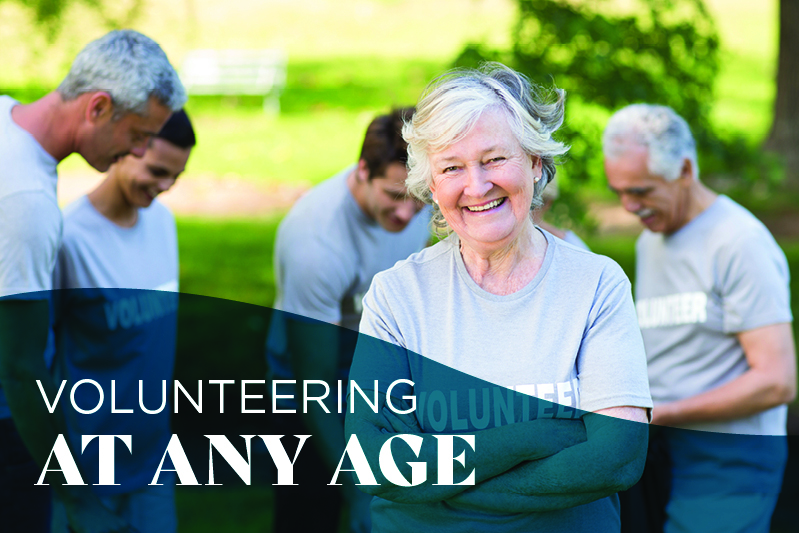
Transitioning into your “golden years” is often seen as a time to slow down, relax and truly enjoy the life you’ve worked hard to build. At Tutera, we see retirement as the start of a vibrant new chapter centered on you and what gives your life meaning. One of the most rewarding ways to shape this chapter is by giving back to others through volunteer service. No matter your age, you can share your hard-earned wisdom and compassionate heart by taking part in volunteer activities for seniors.
One of the best aspects of volunteering is that there is no age limit, and seniors often have the greatest impact, drawing on decades of lived experience, wisdom and practical knowledge. When seniors engage in community service projects, it’s a beneficial experience for everyone involved. Not only does the community receive vital support, but those volunteers also gain a renewed sense of purpose that enhances their quality of life.
Here, we’ll explore why volunteering at any age is an incredible way to enrich your life in senior living and offer some practical community service ideas to help you learn where to get started.
What Does Volunteering Look Like for Seniors?
Volunteering is traditionally defined as the act of freely offering one’s time and labor for community service. While this is still true for older adults, volunteering may focus more on offering one’s time than offering one’s labor.
Factors to Consider for Volunteering Ideas
- Can you engage in physical activity that is not strenuous (e.g., organizing, folding, packing)?
- Do you enjoy talking with people and sharing your experiences/knowledge?
- What is most important to you? (e.g., education, being creative, helping animals, feeding people)
- Would you rather work with animals, work with people or work by yourself?
- Do you want to volunteer within or outside of your community (or both)?
- What makes you feel important? (e.g., being a reliable source of information, being a warm presence, being emotionally supportive)
The Benefits of Volunteering for Seniors
When the reasons for volunteering may be personal, there are proven reasons why it is so beneficial for seniors.
Providing a Mental & Emotional Boost
One of the greatest challenges in senior health is the risk of social isolation or not feeling important to those around them. Community involvement for seniors provides a vital sense of belonging – knowing that a local organization is counting on you to show up creates a “behavioral activation” that helps reduce the risk of concerns like depression and anxiety.
Creating a Longer & Healthier Life
Studies have shown that older adults who volunteer at least 100 hours per year (about two hours a week) are less likely to develop hypertension and have better cardiovascular health. Volunteer activities for seniors that are both physically and mentally engaging provide incredible benefits for seniors’ health and wellness.
Enhancing Cognitive Sharpness
Many senior volunteering opportunities require problem solving, communication and memory. These tasks stimulate neuroplasticity, which is the brain’s ability to form new neural connections. Simple acts like memorizing names or even organizing documents help improve your cognitive health.
Volunteer Activity Ideas for Every Lifestyle
Finding the right fit for volunteer activities is key to seniors staying connected. Here are a variety of ideas to consider for different lifestyles and interests.
Mentorship & Education
- Tutoring: Many schools and libraries seek older mentors to help children with reading or math. You can read to students, help organize the library or work one-on-one with students on specific subjects.
- Professional Mentoring: If you’re not interested in working with children but still want to help others by sharing your knowledge and wisdom, professional mentoring might be a great option. You can meet with younger adults who are just entering your field and provide them with the tools they need to succeed.
- ELD Support: Working with both adults and kids, you can help new residents in your community practice English through conversational groups. In fact, many schools and community centers offer programs and are more than happy to have volunteers help.
Environment & Animals
- Community Gardens: Many neighborhoods have shared gardens that need experienced hands for weeding, planting and harvesting. This is also a great opportunity to enjoy the outdoors, get some exercise and help your community.
- Animal Shelters: If you love animals but aren’t ready for the commitment of a full-time pet, volunteering at a shelter to socialize cats or walk dogs can be incredibly rewarding. However, some shelters require a commitment to volunteer one to two times a week for one to three months, so make sure to check with your local shelter.
- Parks & Trails: For seniors who enjoy walking trails, one option is to assist with light “beautification” projects both within and outside of your own community. You could also serve as a trail guide in local nature preserves or parks.
Community & Support
- Food Pantries: Both food pantries and soup kitchens are often the backbone of a community and rely heavily on the reliability of senior volunteers sorting and distributing food.
- Hospitals & Senior Centers: Volunteering your time to be a comforting presence is a great senior volunteer idea. From greeting visitors to providing companionship to hospice patients, these roles require a warm, empathetic presence.
- Museums & Cultural Sites: Are you passionate about a certain historical site or subject? Whether it’s an art, history or science museum, you can share your love with others by volunteering as a docent or usher.
Volunteer Opportunities Right Outside Your Door
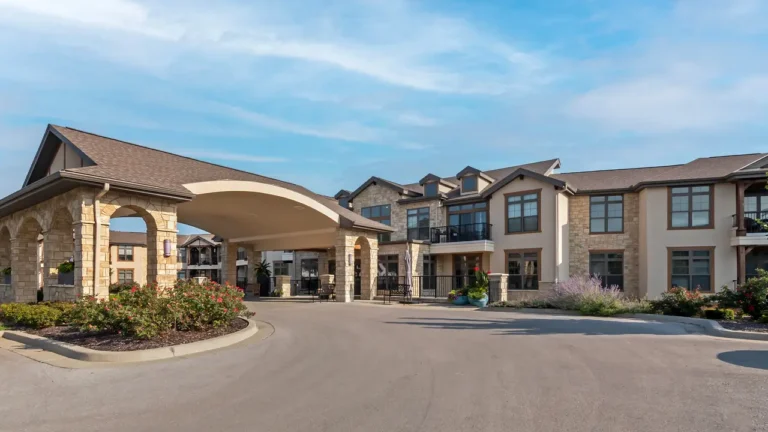
Volunteering can be easier when you live in a senior living community. Often, all you need to do is look right outside your apartment door. Volunteering opportunities for residents are a cornerstone of life at Tutera. We find that when residents take a lead role in community life, the entire culture thrives.
- Welcoming Committees: Residents often volunteer to “buddy up” with new neighbors, helping them navigate their new life and find their place within the community.
- Resident-Led Clubs: Whether it’s leading a knitting circle, a veteran’s coffee hour or a book club, residents can use their skills to enrich the lives of their peers.
- Charity Drives: Many of our communities, such as Fieldstone Place Senior Living and Park Place of Fountain City, host seasonal drives for local toy banks or clothing centers, organized and run by residents themselves.
Frequently Asked Questions About Senior Volunteering Opportunities
I have limited mobility. Can I still volunteer?
Absolutely. There are many “seated” volunteer activities for seniors with limited mobility, such as making phone calls or stuffing envelopes for a nonprofit, or even virtual volunteering like online tutoring or transcribing historical documents.
How much time do I need to commit?
Most organizations are grateful for whatever time you can give. Many seniors find that two to four hours a week is the “sweet spot” that provides a routine without feeling overwhelming.
Where can I find senior volunteering opportunities?
Great places to start include local churches, libraries, the United Way or websites like VolunteerMatch.org. If you live in a Tutera community, simply speak with your Life Enrichment Director!
Enjoy The Act of Giving Back
At Tutera, we don’t just provide a place to live; we provide a place to flourish. We understand that community engagement for seniors is a vital part of a holistic wellness plan. Our teams work closely with residents to identify their passions and connect them with senior volunteer programs both inside and outside our communities.
If you’re interested in learning more about Tutera, then we encourage you to reach out to our team. We can answer your questions, provide additional information and help you learn more about volunteer activities for seniors. You can also use our community location tool to schedule a tour at a community near you.